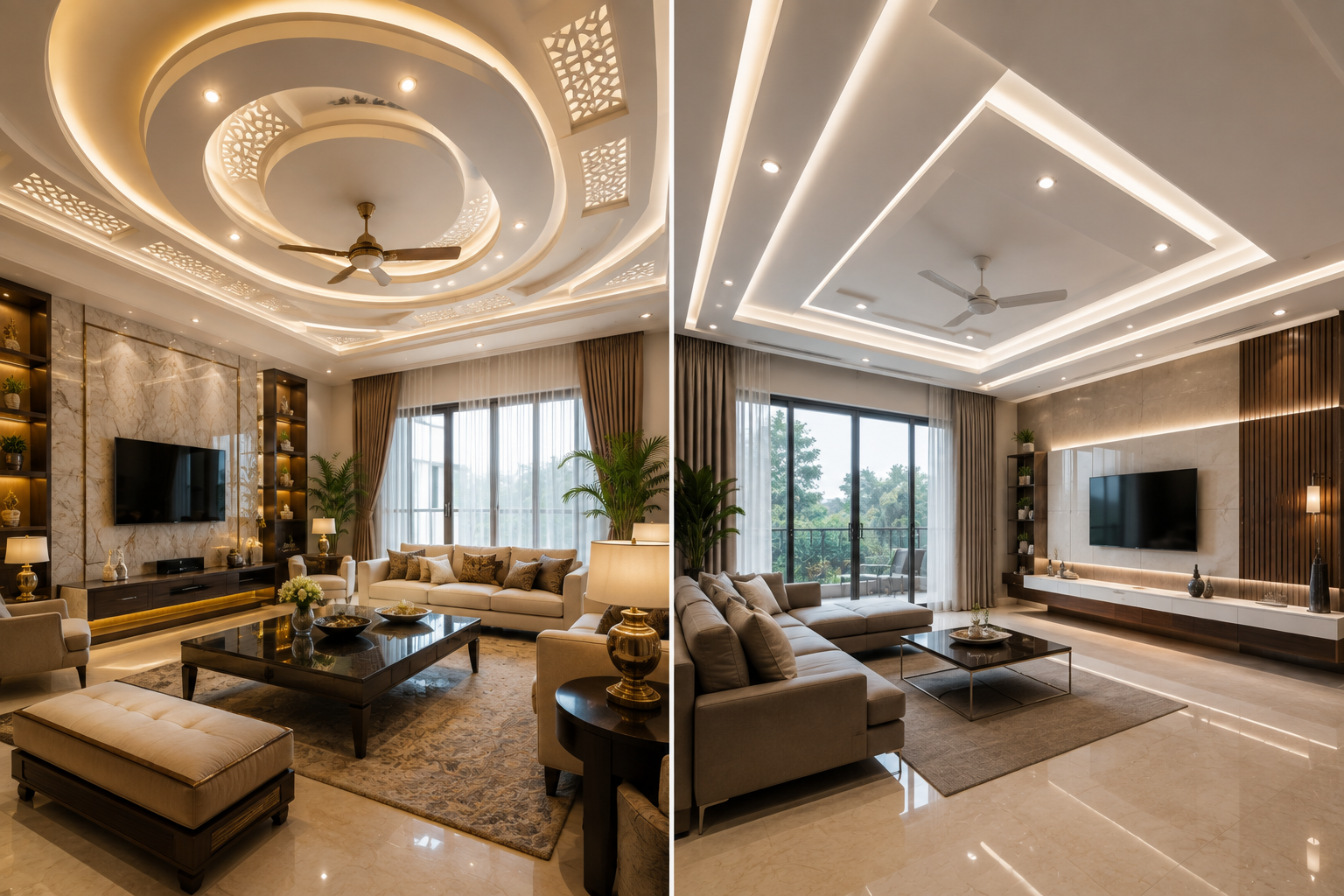
A false ceiling can completely transform the appearance, lighting, and comfort of a home or commercial space. Among the most popular options in India are POP false ceilings and gypsum false ceilings. Both offer attractive designs and can hide wiring, pipes, and structural imperfections, but they differ in installation, flexibility, maintenance, and application.
Understanding the difference between POP and gypsum can help you select the right ceiling solution for your home, office, shop, hotel, or commercial property.
What is a POP False Ceiling?
POP, or Plaster of Paris, is a versatile material that can be molded into customized shapes and decorative patterns. It is widely used for designer ceilings, curved profiles, cornices, layered designs, and intricate ceiling details.
Advantages of POP False Ceiling
- Excellent design flexibility
- Suitable for customized and decorative patterns
- Smooth and seamless finish
- Ideal for curves and intricate designs
- Can create attractive layered ceilings
- Suitable for residential and commercial interiors
POP is particularly useful when the design requires unique shapes and detailed decorative elements.
What is a Gypsum False Ceiling?
Gypsum false ceilings are made using gypsum boards fixed to a metal framework. They are popular in modern interiors because they provide a clean, uniform appearance and can be installed relatively quickly.
Advantages of Gypsum False Ceiling
- Faster installation
- Lightweight construction
- Clean and modern appearance
- Suitable for straight and contemporary designs
- Easy integration of recessed lights and fixtures
- Convenient for large rooms and commercial spaces
Gypsum is commonly used in bedrooms, living rooms, offices, retail spaces, restaurants, and other modern interiors.
POP vs Gypsum Ceiling – Key Comparison
Design Flexibility: POP offers greater freedom for curves, intricate patterns, and customized decorative designs. Gypsum is better suited to clean, straight, and contemporary designs.
Installation: Gypsum boards generally allow faster installation, while POP requires on-site application and finishing.
Finish: Both can provide a smooth premium finish when installed by skilled professionals.
Maintenance: Repairs depend on the type and extent of damage. Individual gypsum board sections can often be replaced, while POP repairs may require localized patching and refinishing.
Cost: The final cost depends on design complexity, material quality, framework, lighting, labour, and room size. A simple design may be more economical than a highly customized ceiling regardless of material.
Which False Ceiling Should You Choose?
Choose POP if you want artistic designs, curves, decorative patterns, or highly customized ceiling features. Choose gypsum if you prefer a modern, clean appearance, faster installation, and easy integration of contemporary lighting.
The best choice ultimately depends on your room size, interior design, budget, lighting requirements, and desired finish.
Why Choose Shriram Fabrication & Engineer?
Shriram Fabrication & Engineer provides professional POP and false ceiling solutions for residential and commercial properties. Our experienced team focuses on customized designs, quality materials, precise installation, attractive finishing, and practical solutions according to the requirements of each project.
Conclusion
Both POP and gypsum false ceilings can enhance the beauty and functionality of an interior. POP is ideal for detailed and artistic designs, while gypsum is an excellent choice for modern and minimal interiors. Consulting an experienced professional can help you select the right ceiling system for a durable, attractive, and well-finished space.