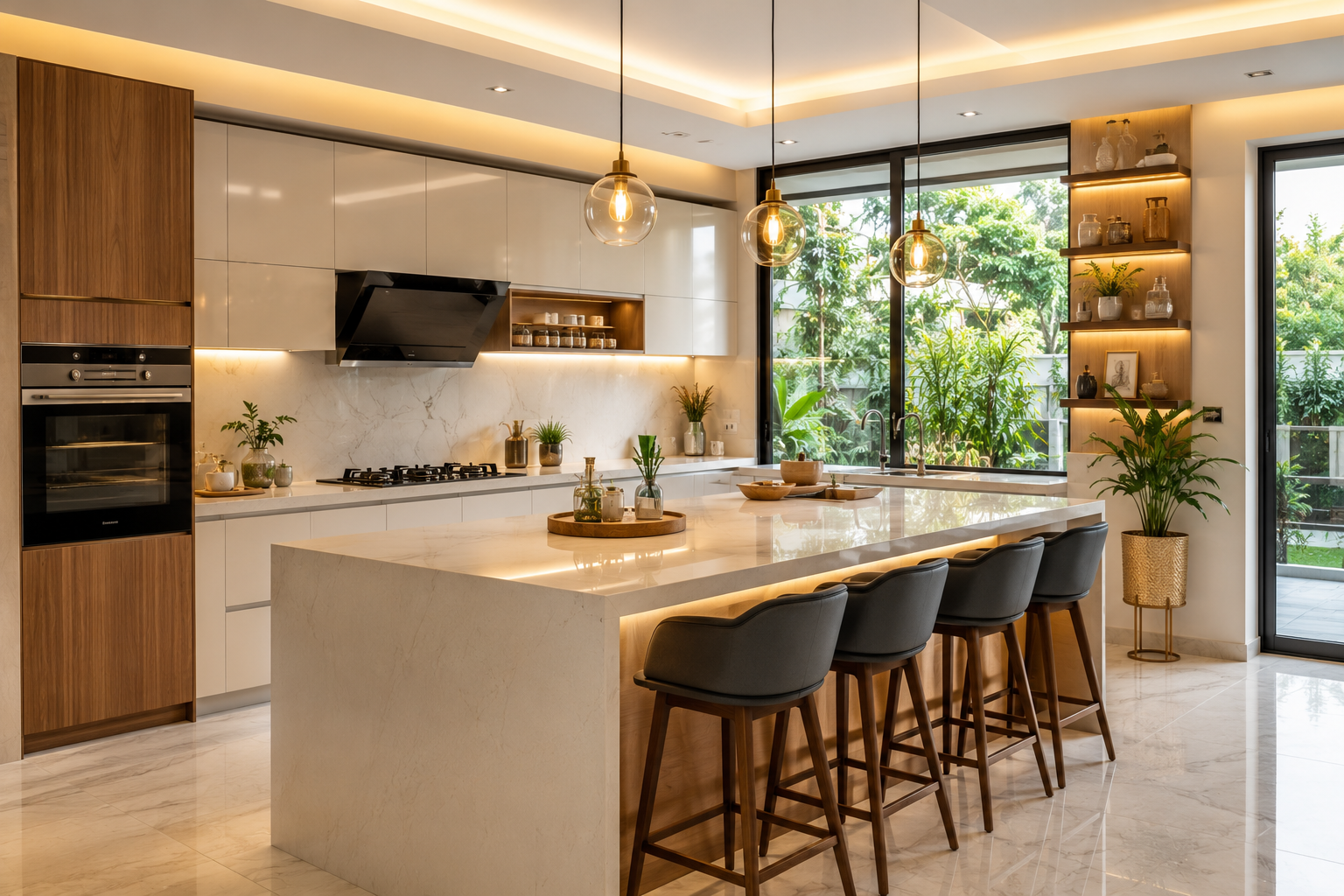
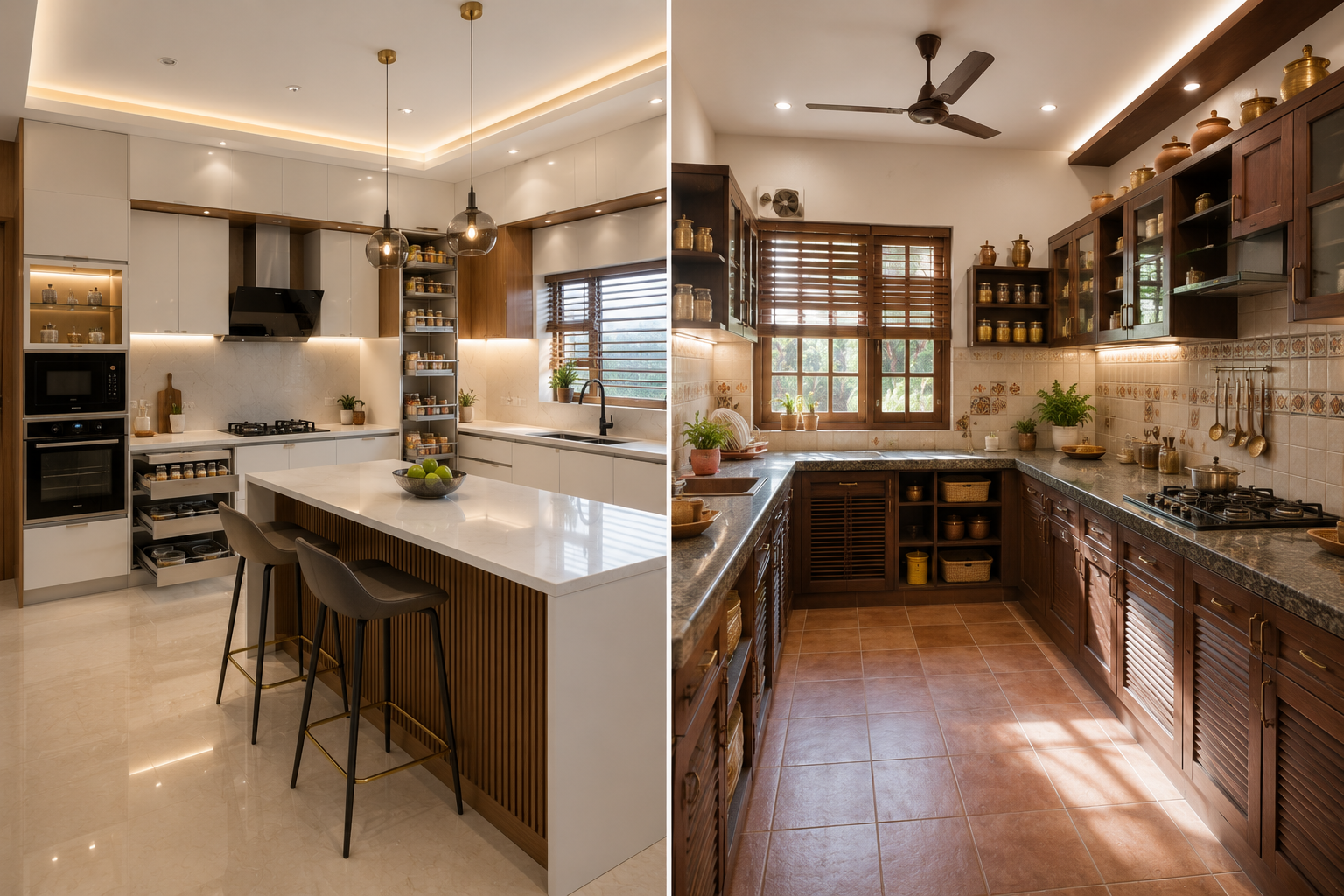
The kitchen has evolved from a basic cooking area into an important part of modern home design. In 2026, homeowners are increasingly looking for kitchens that offer smart storage, efficient layouts, attractive finishes, and easy maintenance. This makes the choice between a Modular Kitchen and a Traditional Kitchen an important decision when building or renovating a home.
Both options have their own advantages. The right choice depends on your space, lifestyle, budget, design preferences, and long-term requirements.
What is a Modular Kitchen?
A modular kitchen consists of factory-made cabinets and modules that are designed according to the available space. These units can include base cabinets, wall cabinets, tall units, drawers, pantry systems, corner storage, and specialized kitchen accessories.
Benefits of a Modular Kitchen
- Better utilization of available space
- Customized layouts and storage
- Modern and stylish appearance
- Easy installation compared with extensive on-site carpentry
- Organized storage with specialized accessories
- Multiple finishes, colors, and design options
- Individual modules can be repaired or replaced
Modular kitchens are particularly suitable for modern apartments, villas, and homes where functionality and aesthetics are equally important.
What is a Traditional Kitchen?
A traditional kitchen is generally constructed on-site using masonry, carpentry, or fixed cabinets. The storage and countertop structure are usually built permanently according to the kitchen layout.
Benefits of a Traditional Kitchen
- Strong and permanent construction
- Flexible on-site customization
- Can be suitable for specific architectural requirements
- Familiar construction method
- May be economical for basic kitchen requirements
However, modifications or repairs can sometimes be more difficult because many components are permanently constructed.
Modular Kitchen vs Traditional Kitchen – Key Comparison
Design: Modular kitchens offer more contemporary designs, finishes, and accessories, while traditional kitchens generally provide a simpler built-in appearance.
Storage: Modular systems can maximize storage through pull-outs, organizers, corner units, and tall cabinets.
Installation: Modular kitchens are manufactured in sections and assembled at the site, making the installation process more systematic.
Maintenance: Individual modular components can generally be accessed, repaired, or replaced more easily.
Customization: Traditional kitchens offer extensive on-site customization, while modular kitchens provide customization through pre-designed modules and dimensions.
Cost: The final cost of either kitchen depends on size, materials, hardware, countertop, accessories, appliances, and design complexity. A basic traditional kitchen may cost less, while premium modular kitchens can offer more features and finishes.
Which Kitchen is Better in 2026?
For homeowners who want smart storage, modern aesthetics, organized layouts, premium finishes, and practical functionality, a modular kitchen is generally the more suitable choice in 2026.
A traditional kitchen can still be a good option when permanent construction, specific site conditions, or a basic budget are the primary considerations.
Why Choose Shriram Fabrication & Engineer?
Shriram Fabrication & Engineer provides customized modular kitchen solutions designed around your space, lifestyle, and requirements. From kitchen cabinets and storage units to modern finishes and functional accessories, our team focuses on quality materials, precise fabrication, attractive designs, and professional installation.
Conclusion
There is no single kitchen solution that works for every home. However, with modern storage technology, stylish finishes, and flexible designs, modular kitchens are becoming a preferred choice for contemporary Indian homes in 2026. Evaluate your space, budget, storage needs, and design preferences before making the final decision.