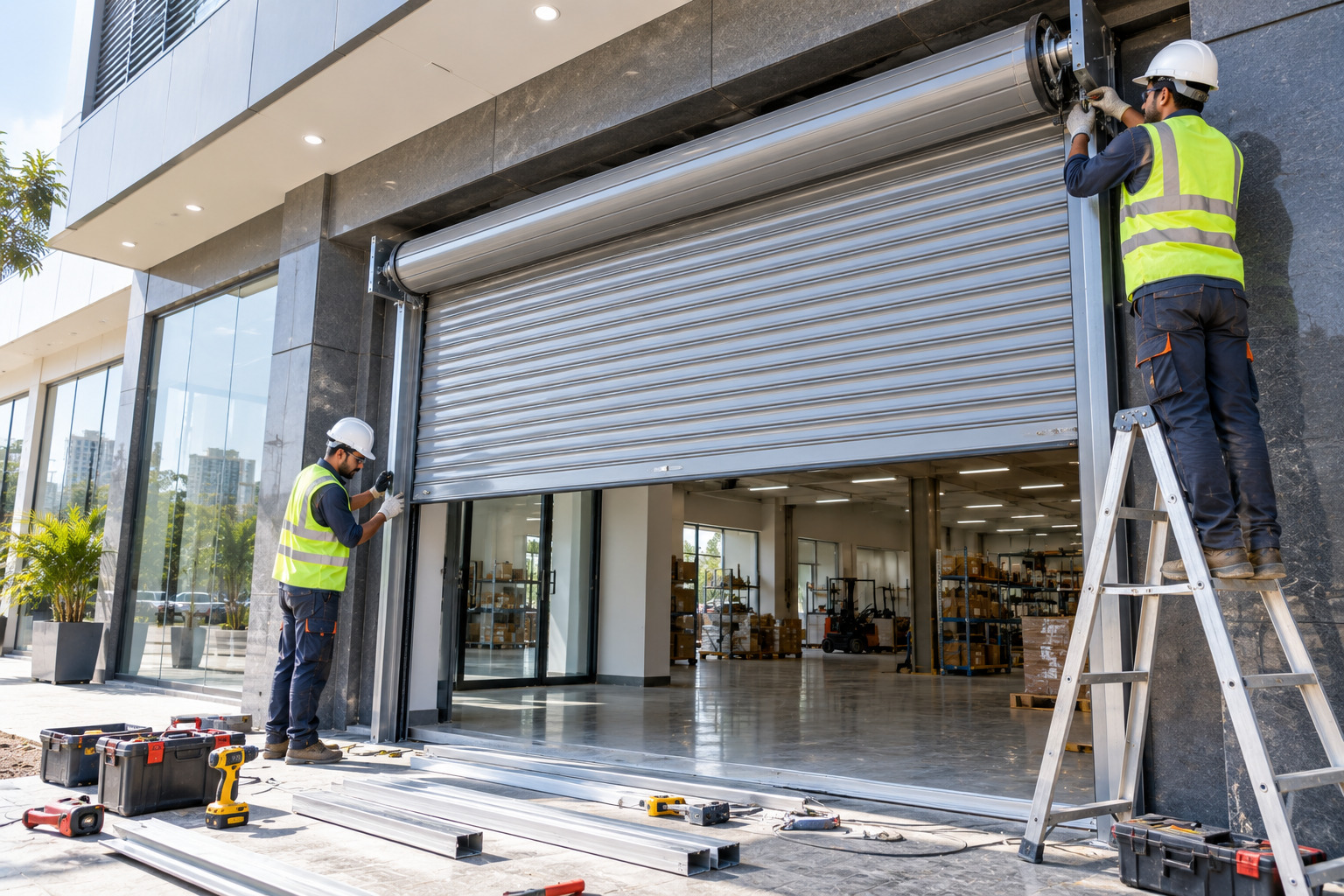
Rolling shutters are widely used for shops, showrooms, warehouses, factories, offices, garages, and commercial properties. They provide controlled access, privacy, and an additional physical security barrier. When selecting a rolling shutter, one of the most important decisions is choosing between a Manual Rolling Shutter and an Automatic Rolling Shutter.
Both systems have their own advantages. The right choice depends on the shutter size, frequency of use, available budget, convenience, and property requirements.
What is a Manual Rolling Shutter?
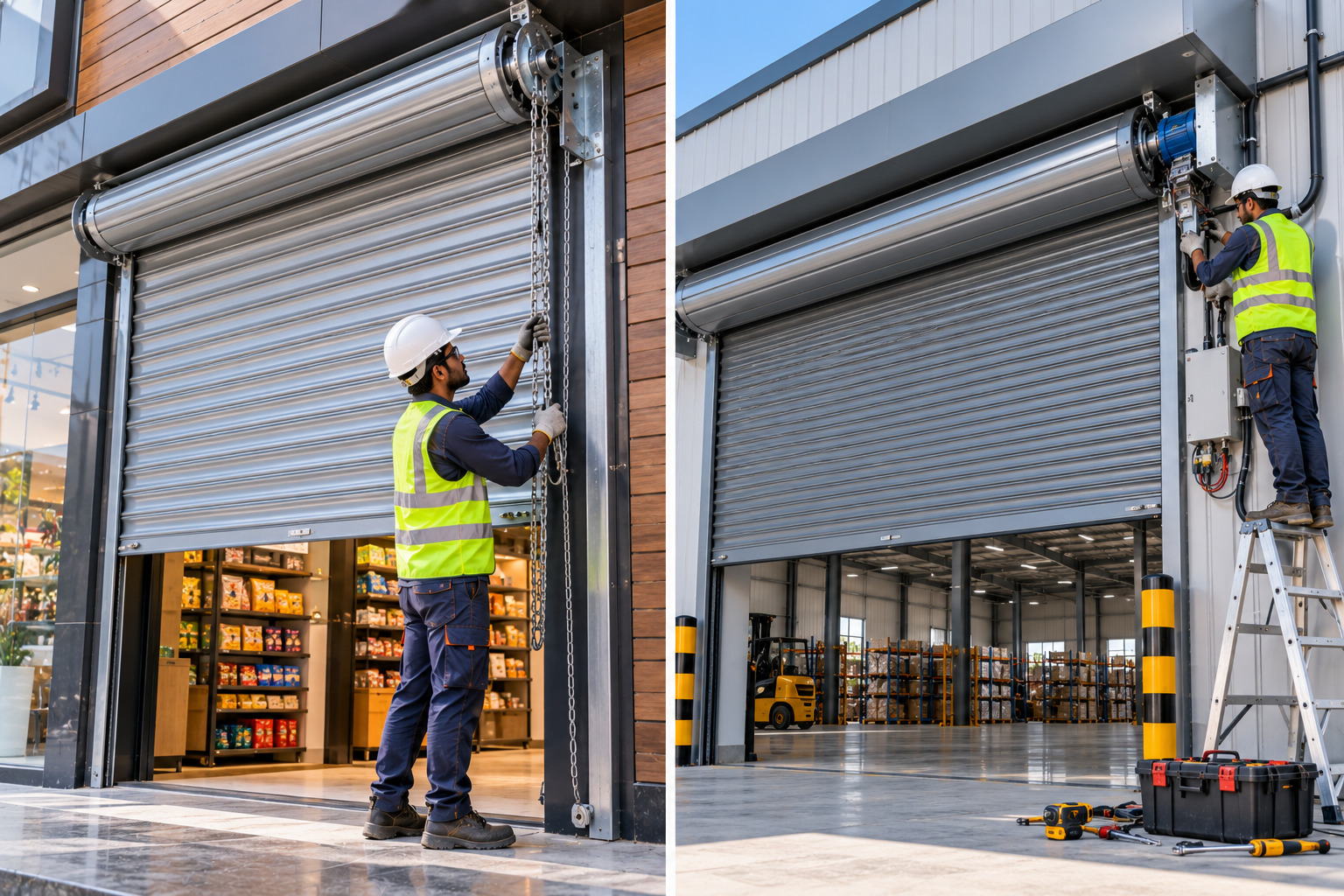
A manual rolling shutter is operated by hand using a spring, chain, pulley, or other mechanical mechanism. It is commonly used for small and medium-sized shop entrances, garages, storage areas, and properties where the shutter is opened and closed less frequently.
Benefits of Manual Rolling Shutters
- Simple operating mechanism
- Generally lower initial investment
- No electrical connection required for operation
- Suitable for smaller openings
- Easy to understand and operate
- Can be a practical choice for low-frequency use
However, larger or frequently operated shutters may require more physical effort, depending on their design and mechanism.
What is an Automatic Rolling Shutter?
An automatic rolling shutter uses a motorized mechanism to open and close the shutter. It can be operated using switches, remote controls, or integrated access-control systems, depending on the selected setup.
Benefits of Automatic Rolling Shutters
- Convenient push-button operation
- Suitable for frequent opening and closing
- Useful for larger and heavier shutters
- Reduces manual effort
- Can integrate with access-control systems
- Suitable for modern commercial and industrial properties
Automatic shutters require an appropriate power supply, motor, controls, and professional installation.
Manual vs Automatic Rolling Shutters – Key Comparison
Operation: Manual shutters require physical operation, while automatic shutters operate through a motorized system.
Convenience: Automatic shutters offer greater convenience, especially at locations where the entrance is used frequently.
Cost: Manual systems generally have a lower initial installation cost. Automatic systems require additional investment for motors and controls.
Maintenance: Both systems require periodic inspection. Automatic shutters also require attention to electrical and motorized components.
Application: Manual shutters can be suitable for smaller shops and low-frequency use, while automatic shutters are often preferred for larger openings, warehouses, showrooms, factories, and frequently used entrances.
Which Rolling Shutter Should You Choose?
Choose a Manual Rolling Shutter if you have a smaller entrance, limited usage, and want a simple operating system. An Automatic Rolling Shutter can be more suitable when convenience, frequent operation, and reduced manual effort are important.
Before making a decision, consider shutter size, operating frequency, power availability, security requirements, budget, and long-term maintenance.
Why Choose Shriram Fabrication & Engineer?
Shriram Fabrication & Engineer provides customized Rolling Shutter Fabrication and Installation Services for residential, commercial, and industrial properties. Our team focuses on accurate measurements, quality materials, proper alignment, reliable operating mechanisms, and professional installation.
Whether you require a manual shutter for a shop or an automatic solution for a warehouse, showroom, factory, or commercial entrance, we can provide a solution based on your project requirements.
Conclusion
Manual and automatic rolling shutters both have practical applications. The right option depends on your property’s size, usage pattern, budget, and convenience requirements. Professional assessment and installation can help ensure smooth operation, reliable performance, and long-term value from your rolling shutter system.